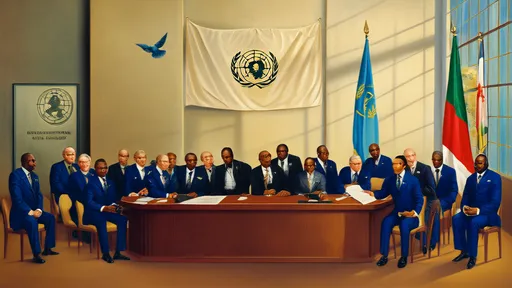
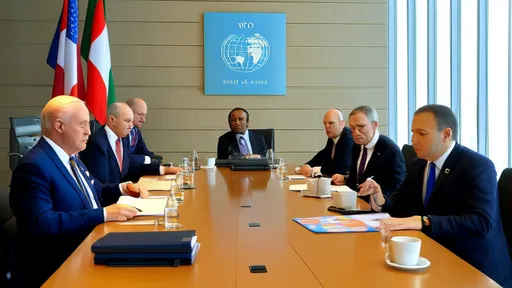
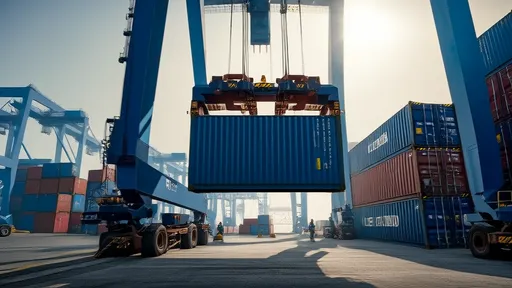
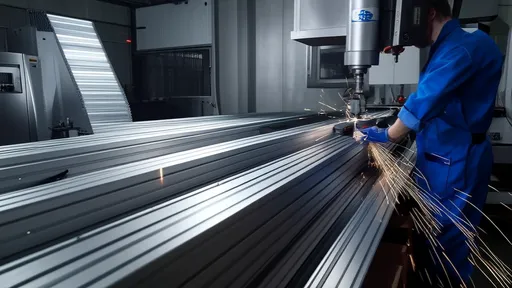
The Canadian government has initiated a formal dispute at the World Trade Organization (WTO) against the United States, contesting the reinstatement of steep tariffs on Canadian steel and aluminum imports. The U.S. recently reimposed a 35% tariff on these critical metals, a move Ottawa argues violates international trade rules and undermines long-standing economic ties between the two nations.
Trade Minister Mary Ng announced the legal challenge, stating that Canada has no choice but to defend its workers and industries from what she described as "unjustified and illegal" trade measures. The tariffs, which took effect last month, were justified by Washington as necessary for national security—a claim Canada firmly rejects. "These tariffs harm Canadian producers, disrupt supply chains, and ultimately hurt consumers on both sides of the border," Ng said in a press conference.
The dispute marks another chapter in the turbulent trade relationship between the two neighbors. In 2018, the Trump administration first imposed tariffs on Canadian steel and aluminum under Section 232 of the Trade Expansion Act, citing national security concerns. While those tariffs were lifted in 2019, the Biden administration’s decision to reinstate them has reignited tensions.
Economic and Political Fallout
Industry groups in Canada have welcomed the WTO challenge, arguing that the U.S. tariffs put thousands of jobs at risk. The Canadian Steel Producers Association emphasized that the country’s steel exports to the U.S. are integral to American manufacturing, particularly in the automotive and construction sectors. "This isn’t just a Canadian issue—it’s a North American issue," said association president Catherine Cobden. "The tariffs disrupt tightly integrated supply chains that have been built over decades."
On the political front, the move has drawn sharp criticism from Canadian lawmakers across party lines. Opposition leaders have called for stronger retaliatory measures, including counter-tariffs on U.S. goods, but the Liberal government has so far opted for a multilateral approach through the WTO. Prime Minister Justin Trudeau stressed that Canada prefers to resolve disputes through established international mechanisms rather than escalating into a trade war.
U.S. Justifications and Canadian Counterarguments
The Biden administration has defended the tariffs as a necessary response to global overcapacity in steel and aluminum production, particularly from China. U.S. Trade Representative Katherine Tai stated that the measures are designed to protect American industries from unfair competition. However, Canada argues that it should not be lumped in with other exporters, given its role as a reliable trading partner and key ally.
Legal experts suggest that the WTO case could hinge on whether the U.S. can successfully justify the tariffs under national security exemptions. While the WTO allows such exemptions, they are rarely invoked and even more rarely upheld. Canada’s legal team is expected to argue that the U.S. action constitutes protectionism disguised as a security measure.
Broader Implications for Trade Relations
The dispute comes at a sensitive time for U.S.-Canada trade relations, which have already been strained by disagreements over dairy market access and electric vehicle incentives under the Inflation Reduction Act. Some analysts warn that prolonged litigation could erode trust in the USMCA, the trade agreement that replaced NAFTA in 2020.
Meanwhile, business leaders on both sides of the border are urging a swift resolution. The Canadian Chamber of Commerce warned that uncertainty over tariffs could deter investment in North American manufacturing at a time when both countries are seeking to strengthen supply chain resilience. "Trade barriers between the U.S. and Canada benefit no one," said chamber head Perrin Beatty. "We need cooperation, not confrontation."
As the WTO process unfolds—a procedure that could take years—Canada is also exploring alternative avenues, including direct negotiations with the U.S. Commerce Department. But with neither side showing signs of backing down, the steel and aluminum dispute appears set to become another protracted battle in the complex web of North American trade politics.
By /Aug 12, 2025

By /Aug 12, 2025

By /Aug 12, 2025

By /Aug 12, 2025

By /Aug 12, 2025

By /Aug 12, 2025

By /Aug 11, 2025

By /Aug 12, 2025
By /Aug 12, 2025

By /Aug 12, 2025

By /Aug 11, 2025

By /Aug 12, 2025

By /Aug 12, 2025

By /Aug 12, 2025
By /Aug 11, 2025
By /Aug 12, 2025
By /Aug 12, 2025

By /Aug 11, 2025

By /Aug 12, 2025
By /Aug 12, 2025