In a groundbreaking development that challenges our understanding of cellular aging, scientists have unveiled a revolutionary technique dubbed the "cellular age eraser." This approach leverages transient reprogramming to effectively turn back the epigenetic clock—the molecular signature of a cell's biological age. Unlike traditional reprogramming methods that risk creating cancerous cells or losing cellular identity, this pulsed strategy offers a tantalizing glimpse into reversing aging while maintaining tissue function.
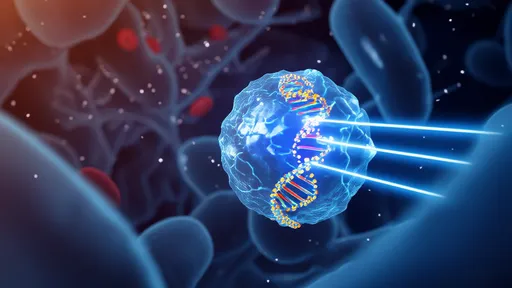
The science hinges on the manipulation of Yamanaka factors—a quartet of proteins (Oct4, Sox2, Klf4, and c-Myc) capable of rewinding adult cells to a pluripotent state. Earlier attempts at cellular reprogramming faced criticism because fully resetting cells to embryonic-like stem cells erased their specialized functions. However, the new transient method applies these factors in brief, controlled bursts, achieving partial rejuvenation without compromising cell identity. Researchers observed that treated cells exhibited younger epigenetic markers while retaining their original tissue-specific characteristics.
What makes this discovery extraordinary is its precision. The epigenetic clock—measured through DNA methylation patterns—showed significant reversal in human fibroblasts and endothelial cells after just a few cycles of treatment. These changes weren’t merely cosmetic; the cells demonstrated improved functionality, including enhanced proliferation and stress resistance. Mouse studies further validated these findings, with treated animals displaying reduced biomarkers of aging in multiple organs.
Critically, the transient approach sidesteps a major pitfall of previous research: cancer risk. Prolonged exposure to reprogramming factors can activate oncogenes, but the abbreviated protocol appears to strike a delicate balance. By stopping short of complete reprogramming, scientists avoid the genomic instability associated with induced pluripotent stem cells (iPSCs). This safety profile makes the technique particularly appealing for therapeutic applications.
The implications for age-related diseases are profound. Neurodegenerative conditions like Alzheimer’s, cardiovascular ailments, and even sarcopenia share roots in cellular aging. Early experiments show that transiently reprogrammed neurons exhibit improved synaptic activity, while aged muscle cells regain regenerative capacity. Though still in preclinical stages, this technology could redefine treatment paradigms for pathologies currently considered irreversible.
Beyond disease intervention, the research sparks philosophical debates about the nature of aging itself. If biological age proves malleable through epigenetic tweaks, could we one day decouple chronological and biological aging? The data suggest that aging might not be a one-way street but rather a dynamic process amenable to intervention. This perspective upends long-held assumptions and opens avenues for maintaining vitality in later life stages.
Commercial interest in the field has surged, with biotech firms racing to develop delivery systems for clinical use. Challenges remain—optimizing treatment duration, ensuring uniform effects across cell types, and scaling up for human trials. Yet, the pace of progress astonishes even seasoned researchers. What began as an esoteric inquiry into cellular plasticity now stands poised to transform regenerative medicine.
Ethical considerations accompany this breakthrough. While reversing aging in somatic cells holds therapeutic promise, applying similar techniques to germline cells or pursuing extreme life extension raises complex questions. The scientific community emphasizes responsible development, prioritizing treatments for age-related illnesses before exploring enhancement applications.
As research accelerates, one truth becomes clear: we’re witnessing the dawn of a new era in biology. The cellular age eraser doesn’t merely add years to life—it promises to add life to years. With each experiment, scientists peel back another layer of the aging mystery, inching closer to therapies that could redefine human healthspan.

By /Aug 18, 2025
By /Aug 18, 2025
By /Aug 18, 2025

By /Aug 18, 2025

By /Aug 18, 2025

By /Aug 18, 2025
By /Aug 18, 2025
By /Aug 18, 2025

By /Aug 18, 2025

By /Aug 18, 2025

By /Aug 18, 2025

By /Aug 18, 2025

By /Aug 18, 2025
By /Aug 18, 2025
By /Aug 18, 2025

By /Aug 18, 2025
By /Aug 18, 2025
By /Aug 18, 2025
By /Aug 18, 2025

By /Aug 18, 2025