In a groundbreaking discovery that could reshape our understanding of gut-brain communication, researchers have identified a previously unknown "express pathway" through which microbial metabolites travel from intestines to brainstem neurons in mere seconds. This lightning-fast signaling system, mediated by specialized vagus nerve fibers, challenges decades-old assumptions about the sluggish pace of gut-derived chemical messaging.
The Vagus Express: Nature's Biochemical Bullet Train
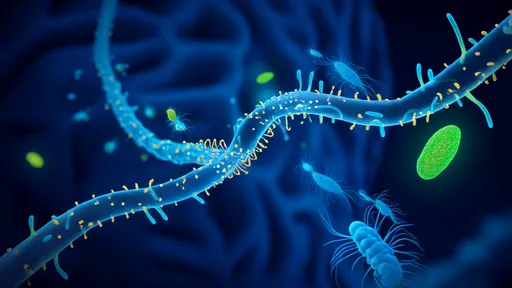
Deep within our abdominal cavity, trillions of microbes continuously produce thousands of bioactive compounds. While scientists knew these molecules influenced brain function, the prevailing view held that they required minutes to hours to exert effects - either through gradual absorption into circulation or slow neural signaling. The new research reveals certain microbial metabolites bypass this traffic entirely, boarding what amounts to a biochemical bullet train.
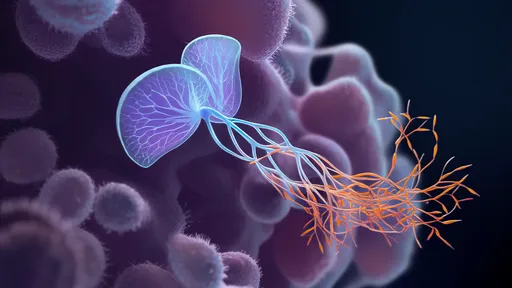
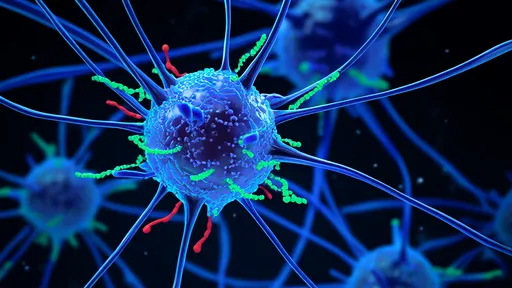
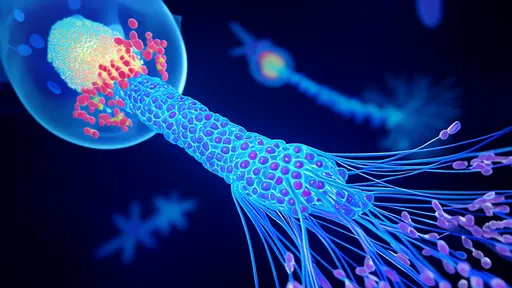
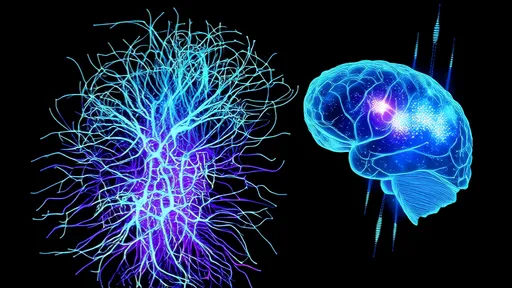
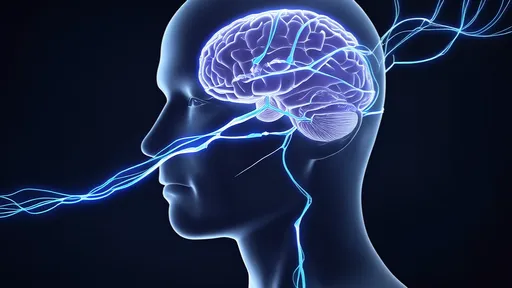
Specialized neuropod cells lining the intestinal epithelium act like biological ticket scanners, identifying specific microbial metabolites and immediately packaging them into neural signals. These signals then race up vagus nerve fibers at speeds exceeding 100 meters per second - fast enough to deliver gut contents to the brainstem faster than a caffeine molecule reaches the bloodstream from your morning coffee.
Metabolic Morse Code: Deciphering the Microbial Alphabet
Early evidence suggests different bacterial species may have developed distinct "chemical dialects" that vagal fibers can distinguish. Short-chain fatty acids like butyrate appear to transmit calming signals, while certain amino acid metabolites trigger alertness. This microbial Morse code could explain why gut dysbiosis correlates with such diverse neurological conditions, from depression to Parkinson's disease.
What astonishes researchers most is the system's precision. "We're not talking about vague hormonal whispers," explains lead researcher Dr. Elena Petrov. "These are targeted, molecule-specific signals that maintain what amounts to a continuous live feed from gut to brain. The vagus nerve isn't just a wandering nerve - it's a superhighway carrying terabytes of microbial data every minute."
The Second Brain's Hotline: Implications for Medicine
This discovery opens radical possibilities for treating neurological disorders. Already, researchers are experimenting with "vagus modulation diets" - precise combinations of fibers and fermented foods designed to optimize microbial signaling. Early trials show promise in reducing seizure frequency in epilepsy patients by up to 40% through dietary changes alone.
Psychiatry may benefit most profoundly. The gut microbiome's ability to directly stimulate mood-regulating nuclei in the brainstem could explain why certain probiotics outperform placebos for depression. Pharmaceutical companies are racing to develop "psychobiotics" - designer microbes engineered to produce specific neuroactive metabolites.
Perhaps most intriguing are the implications for consciousness itself. Some theorists suggest this constant stream of microbial data may play an underappreciated role in shaping subjective experience. As one philosopher of mind quipped, "We've spent centuries searching for the seat of the soul while ignoring the soup of signals rising from our guts."
Technical Challenges and Ethical Quandaries
Harnessing this system presents unique challenges. The vagus nerve's complexity dwarfs the internet's fiber optic networks, with over 100,000 individual fibers carrying bidirectional traffic. Mapping which fibers carry which signals requires nanoscale precision beyond current technology.
Ethical questions abound regarding microbiome manipulation. Should we edit microbes to produce happiness-inducing metabolites? Could governments regulate gut bacteria as controlled substances? The emerging field of "neurogastroethics" grapples with these dilemmas as research accelerates.
One thing becomes increasingly clear: Descartes' division between mind and body appears more fictional by the day. As we unravel the intimate dialogue between gut microbes and brain neurons, we're discovering that what we call "thinking" may be as much a digestive process as a cerebral one.
By /Aug 18, 2025
By /Aug 18, 2025
By /Aug 18, 2025
By /Aug 18, 2025
By /Aug 18, 2025

By /Aug 18, 2025
By /Aug 18, 2025
By /Aug 18, 2025
By /Aug 18, 2025

By /Aug 18, 2025

By /Aug 18, 2025

By /Aug 18, 2025
By /Aug 18, 2025
By /Aug 18, 2025
By /Aug 18, 2025

By /Aug 18, 2025
By /Aug 18, 2025
By /Aug 18, 2025
By /Aug 18, 2025
By /Aug 18, 2025