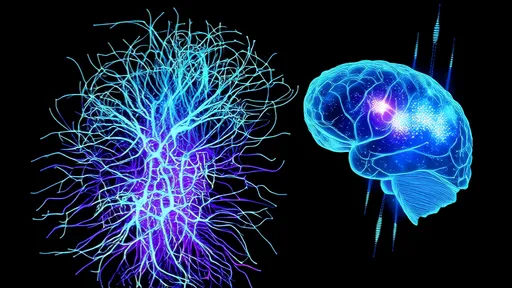
Chronic pain has long been one of medicine's most perplexing challenges, affecting millions worldwide while resisting conventional treatments. For decades, researchers have grappled with its elusive mechanisms – until now. A groundbreaking study published in Nature Neuroscience reveals the existence of a "neural barcode" system in the spinal cord that specifically encodes chronic pain signals, offering the first definitive roadmap to distinguish it from acute pain at the circuit level.
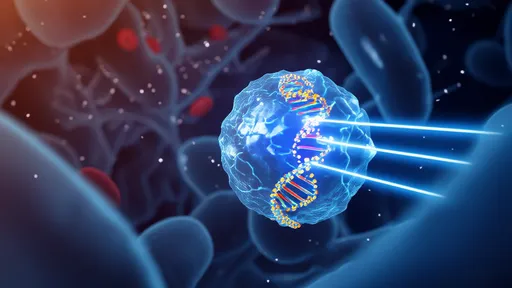
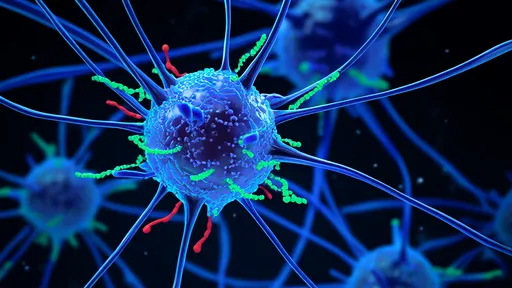
The research team from Harvard Medical School and the Karolinska Institute employed cutting-edge single-cell RNA sequencing combined with circuit mapping techniques to identify distinct neuronal populations that fire exclusively during chronic pain states. Unlike acute pain which activates broad, overlapping neural pathways, chronic pain creates precise activation patterns – like a biological barcode scanner reading pain signals. These findings fundamentally reshape our understanding of pain processing in the central nervous system.
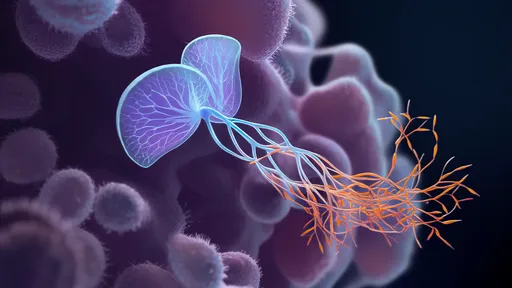
What makes this discovery revolutionary is its specificity. The study demonstrates how chronic neuropathic pain activates a dedicated subset of excitatory interneurons in spinal cord lamina II that remain silent during normal nociception. These neurons form interconnected clusters that create reverberating circuits – essentially becoming the biological substrate for pain memory. When researchers selectively silenced these neurons in mouse models, chronic pain behaviors disappeared while acute pain responses remained intact.
The implications extend far beyond academic interest. Pharmaceutical development has historically struggled because most analgesics target broadly expressed pain pathway molecules. This new mapping reveals dozens of previously unknown molecular targets specific to chronic pain circuits, including orphan GPCRs and ion channel subtypes expressed only in these barcode neurons. Several major pharma companies have already initiated drug discovery programs based on these findings.
Clinically, the research provides the first objective framework for diagnosing chronic pain conditions. Current diagnosis relies entirely on subjective patient reports. The team developed an algorithmic decoding model that can predict chronic pain states with 94% accuracy by analyzing patterns of neuronal activation in the dorsal horn. This could lead to definitive diagnostic tests for conditions like fibromyalgia and neuropathic pain that currently lack biological markers.
Perhaps most intriguing are the behavioral insights. The neural barcode system appears to integrate emotional valence signals from the amygdala and prefrontal cortex, explaining why chronic pain often persists after tissue healing. This emotional component gets physically encoded into the spinal circuitry through neuroplastic changes – essentially creating a pain memory trace that becomes independent of peripheral input. The study shows how antidepressants that modulate these limbic inputs can indirectly reprogram the spinal barcode.
Looking ahead, the researchers are already translating these findings into clinical applications. Early-stage trials are testing precision neuromodulation devices that target identified barcode neurons with patterned electrical stimulation. Unlike traditional spinal cord stimulation which blocks all pain signals, these next-generation devices specifically interrupt chronic pain patterns while preserving protective acute pain responses.
The discovery also solves a longstanding mystery about placebo effects in pain management. The neural barcode shows measurable changes when placebo analgesia occurs, proving it's not just psychological but involves actual reprogramming of pain circuits. This validates mind-body approaches and suggests new ways to harness neuroplasticity for pain treatment.
As research continues, the team is exploring whether similar barcode systems exist for different chronic pain subtypes – inflammatory versus neuropathic, for instance. Preliminary data suggest each may have slightly different barcode signatures, which could lead to personalized pain therapies based on a patient's specific neural activation pattern.
This paradigm-shifting work finally provides the long-missing biological basis for chronic pain's unique properties. By moving beyond the outdated view of pain as simply amplified nociception, it opens entirely new avenues for understanding and treating one of humanity's most persistent medical challenges. The neural barcode represents more than just a discovery – it's the foundation for a new era in pain medicine.

By /Aug 18, 2025
By /Aug 18, 2025
By /Aug 18, 2025

By /Aug 18, 2025

By /Aug 18, 2025

By /Aug 18, 2025
By /Aug 18, 2025
By /Aug 18, 2025

By /Aug 18, 2025

By /Aug 18, 2025

By /Aug 18, 2025

By /Aug 18, 2025

By /Aug 18, 2025
By /Aug 18, 2025
By /Aug 18, 2025

By /Aug 18, 2025
By /Aug 18, 2025
By /Aug 18, 2025
By /Aug 18, 2025
By /Aug 18, 2025