In the harsh, arid landscapes where water is scarce and temperatures soar, desert-dwelling lizards have evolved remarkable adaptations to survive. Among their most fascinating features is a specialized form of cutaneous respiration—often colloquially referred to as "skin breathing." While this phenomenon isn’t entirely unique to lizards, certain desert species have refined it to an extraordinary degree, allowing them to thrive in environments where other creatures would perish. Researchers are now uncovering the intricate mechanisms behind this evolutionary marvel, revealing insights that could inspire innovations in biomimetic technology.
The concept of cutaneous respiration isn’t new to biology. Many amphibians, such as frogs and salamanders, rely heavily on their skin for gas exchange. However, lizards—particularly those inhabiting deserts—have developed a more sophisticated system. Unlike amphibians, which typically require moist skin for efficient gas diffusion, desert lizards manage this feat in some of the driest conditions on Earth. Their secret lies in a combination of specialized skin structures, behavioral adaptations, and physiological efficiencies that minimize water loss while maximizing oxygen uptake.
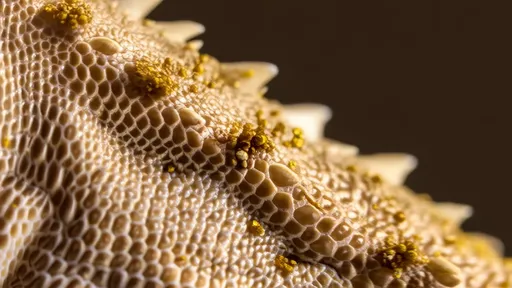
One of the most studied species in this regard is the desert iguana (Dipsosaurus dorsalis), a reptile native to the Sonoran and Mojave deserts. These lizards exhibit a highly vascularized epidermis, with blood vessels lying exceptionally close to the skin’s surface. This anatomical arrangement facilitates direct gas exchange between the environment and the bloodstream, bypassing the need for constant lung activity. During periods of rest—particularly in the cooler hours of early morning or late evening—the desert iguana can supplement up to 30% of its oxygen needs through its skin, reducing the energy expenditure associated with active lung ventilation.
But how do these lizards prevent dehydration while breathing through their skin? The answer lies in their unique integumentary system. Unlike the permeable skin of amphibians, desert lizard epidermis is fortified with lipids and other hydrophobic compounds that drastically reduce water loss. Additionally, their scales are arranged in a way that minimizes surface area exposure during the hottest parts of the day. Some species even exhibit microstructures on their scales that trap a thin layer of humid air against the skin, creating a localized microenvironment conducive to gas exchange without significant moisture loss.
Recent studies have also highlighted the role of behavioral adaptations in optimizing cutaneous respiration. Many desert lizards engage in "sand bathing," where they partially bury themselves in cooler subsurface layers. This behavior not only helps regulate body temperature but also increases the humidity around their skin, enhancing the efficiency of gas diffusion. Furthermore, certain species alternate between periods of lung-dominated respiration during activity and skin-dominated respiration during rest, creating a dynamic system that balances energy conservation with metabolic demand.
The implications of these findings extend far beyond herpetology. Engineers and material scientists are particularly interested in mimicking the desert lizard’s skin for applications in breathable yet waterproof fabrics, or even for designing more efficient gas exchange systems in industrial settings. The idea of creating synthetic surfaces that can selectively allow oxygen and carbon dioxide to pass while retaining moisture could revolutionize fields ranging from medical devices to environmental control systems in spacecraft.
Another intriguing avenue of research explores whether these adaptations could inform new approaches to treating respiratory conditions in humans. While mammalian skin is far less permeable than that of lizards, understanding how desert species optimize gas exchange under constraints might inspire novel therapies for patients with compromised lung function. Some researchers speculate about the potential for developing biomimetic membranes that could assist in oxygenation without the need for mechanical ventilation.
As climate change continues to alter habitats worldwide, the study of desert-adapted species becomes increasingly urgent. These lizards represent millions of years of evolutionary refinement to extreme conditions—a living library of survival strategies that may hold keys to addressing human challenges in an era of environmental instability. Their "skin lungs" are just one example of nature’s ingenuity, reminding us that sometimes the most advanced solutions are those that have been tested by time itself.
Field biologists continue to document new variations of cutaneous respiration across different desert lizard species, each with its own subtle refinements. From the Australian thorny devil (Moloch horridus) with its capillary action-assisted water transport system to the Namibian web-footed gecko (Pachydactylus rangei) that supplements its respiration through specialized toe pads, the diversity of adaptations is staggering. What unites them all is the elegant efficiency of their designs—honed by natural selection to extract every possible advantage from their unforgiving environments.
As technology allows for more detailed examination at the microscopic and molecular levels, scientists anticipate discovering even more sophisticated mechanisms at work. Advanced imaging techniques have already revealed previously unnoticed nanostructures in lizard skin that may play roles in gas exchange regulation. Simultaneously, genomic studies are uncovering the genetic blueprints behind these remarkable physiological traits, opening possibilities for synthetic biology applications.
The story of desert lizards and their skin-based respiration stands as a testament to life’s resilience and adaptability. In understanding how these creatures have conquered their extreme habitats, we gain not only scientific knowledge but also profound respect for the natural world’s capacity for innovation. As research progresses, we may find that these small, scaly survivors have much to teach us about thriving in challenging conditions—lessons that could prove invaluable as humanity faces its own environmental challenges in the coming centuries.
By /Aug 18, 2025

By /Aug 18, 2025

By /Aug 18, 2025
By /Aug 18, 2025
By /Aug 18, 2025

By /Aug 18, 2025

By /Aug 18, 2025

By /Aug 18, 2025
By /Aug 18, 2025
By /Aug 18, 2025
By /Aug 18, 2025
By /Aug 18, 2025

By /Aug 18, 2025

By /Aug 18, 2025

By /Aug 18, 2025

By /Aug 18, 2025

By /Aug 18, 2025

By /Aug 18, 2025

By /Aug 18, 2025

By /Aug 18, 2025