In the intricate dance of survival between parasitic plants and their hosts, a remarkable discovery has unveiled a sophisticated molecular espionage system. Researchers have identified a previously unknown mechanism by which parasitic plants intercept and exploit defense signals from their hosts, effectively turning the host's own weapons against itself. This finding not only reshapes our understanding of plant-plant interactions but also opens new avenues for agricultural pest control.
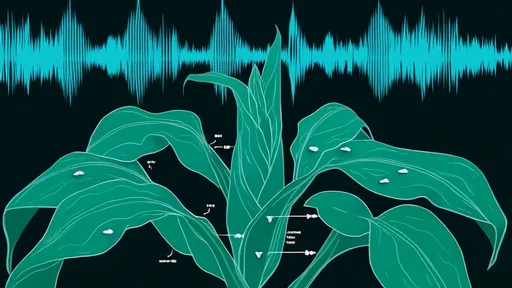
The study, published in a leading botanical journal, reveals how parasitic plants like dodder (Cuscuta species) act as molecular "gene sentinels," eavesdropping on the host plant's defense communication. These stealthy parasites have evolved the ability to detect mobile mRNA molecules that host plants use to coordinate systemic defense responses against invaders. By intercepting these distress signals, the parasitic plant gains advance warning of impending host defenses and can prepare countermeasures.
What makes this discovery particularly groundbreaking is the precision with which these molecular interceptions occur. The parasitic plant doesn't merely detect generic stress signals - it specifically recognizes and responds to the host's defense-related mRNA. This suggests an evolutionary arms race at the genetic level, where parasites have developed specialized mechanisms to decode their host's chemical "language" of danger signals.
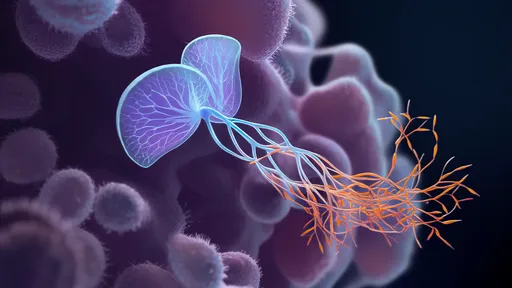
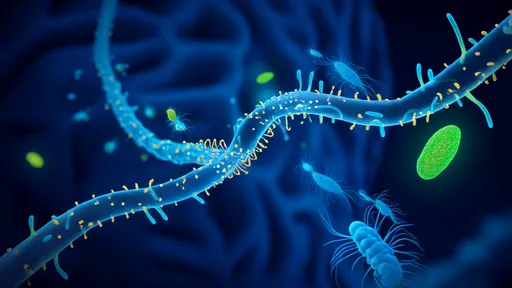
Scientists employed cutting-edge molecular tracking techniques to follow the journey of defense signals from host to parasite. They discovered that mobile mRNA molecules travel through the haustorium, the specialized root-like structure that connects the parasite to its host's vascular system. These mRNA molecules are then translated into proteins within the parasitic plant, effectively giving the parasite insider knowledge about the host's defensive strategies.
The implications of this discovery extend far beyond basic plant biology. Many of the world's most destructive agricultural weeds are parasitic plants, causing billions in crop losses annually. Traditional control methods often prove ineffective because they fail to account for this sophisticated signaling interception. By understanding exactly how parasites hijack host defenses, researchers can develop more targeted control strategies that disrupt this molecular espionage.
One particularly promising avenue involves manipulating the mobile mRNA signals to send false information to the parasitic plant. Researchers are experimenting with engineered defense signals that could trigger inappropriate responses in the parasite, essentially creating a form of biological misinformation warfare at the cellular level. Early laboratory tests have shown that certain modified mRNA sequences can indeed confuse parasitic plants and reduce their virulence.
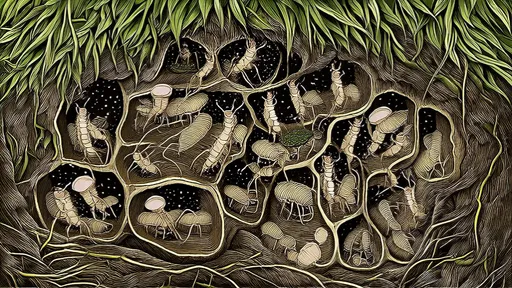
The study also sheds light on fundamental questions about inter-organism communication. The fact that mRNA molecules can maintain their function after crossing species boundaries challenges some long-held assumptions about the specificity of genetic information transfer. This cross-species mRNA signaling may represent a much more widespread phenomenon in nature than previously recognized, potentially occurring in other parasitic relationships beyond plants.
Field researchers have begun documenting intriguing correlations between parasitic plant virulence and the diversity of mobile mRNA in different host species. Some host plants appear to have evolved more cryptic defense signaling systems that are harder for parasites to intercept, suggesting an ongoing co-evolutionary battle. This variability may explain why certain crop varieties show natural resistance to parasitic plants while others succumb easily.
As climate change alters growing conditions and pest distributions, understanding these intricate plant interactions becomes increasingly urgent. Parasitic plants are expected to expand their ranges into new territories, and some may evolve even more sophisticated signal interception capabilities. The current research provides a crucial foundation for anticipating and mitigating these future threats to global food security.
The discovery of this "gene sentinel" system in parasitic plants represents a paradigm shift in our understanding of interspecies communication. It reveals a hidden world of molecular espionage occurring right beneath our feet, where plants wage silent wars using sophisticated biological intelligence. As research continues, scientists hope to decode more secrets of this clandestine communication network, potentially unlocking new approaches to sustainable agriculture and ecological management.
By /Aug 18, 2025

By /Aug 18, 2025
By /Aug 18, 2025
By /Aug 18, 2025

By /Aug 18, 2025

By /Aug 18, 2025
By /Aug 18, 2025

By /Aug 18, 2025
By /Aug 18, 2025

By /Aug 18, 2025

By /Aug 18, 2025
By /Aug 18, 2025

By /Aug 18, 2025

By /Aug 18, 2025

By /Aug 18, 2025

By /Aug 18, 2025
By /Aug 18, 2025

By /Aug 18, 2025

By /Aug 18, 2025

By /Aug 18, 2025