Insect Photonic Armor": The Compressive Photonic Crystal Structure of the Exoskeleton of Buprestidae Beetles

Aug 18, 2025 By

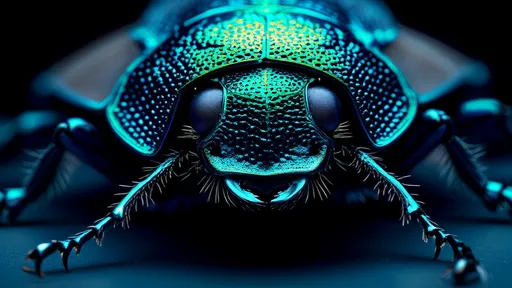
In the dense rainforests of Southeast Asia, a shimmering jewel scurries across the bark of a rotting log. The jewel beetle, or Buprestidae, has captivated scientists not for its ecological role, but for an extraordinary feat of evolutionary engineering: its exoskeleton contains photonic crystals that manipulate light while remaining incredibly durable. This natural armor, thinner than a human hair yet resistant to crushing forces, is inspiring breakthroughs in materials science, from aerospace coatings to next-generation solar cells.

What makes these beetles truly remarkable is the hierarchical architecture of their exoskeletons. Unlike synthetic photonic crystals—which require pristine laboratory conditions—the beetle's nanostructures self-assemble at ambient temperatures. Microscopic layers of chitin and proteins form a helicoidal stack, resembling a spiral staircase at the molecular level. When light interacts with this arrangement, certain wavelengths are amplified while others cancel out, creating the iconic metallic sheen that shifts between emerald green and fiery copper depending on viewing angle.

The real marvel lies in how this delicate optical system withstands punishment. Researchers at MIT recently discovered that the crystal lattice contains fracture-resistant microdomains. Under pressure, stress cracks propagate in zigzag patterns rather than straight lines, preventing catastrophic failure. This "controlled cracking" mechanism, akin to crumple zones in cars, allows the structure to dissipate energy while maintaining structural integrity—a property engineers are now mimicking in lightweight aircraft components.

Biophysicists have identified another clever adaptation: the crystals are chemically graded. The topmost layers, rich in hydrophobic waxes, repel water and resist abrasion. Deeper layers gradually transition to more flexible compositions, creating a natural shock absorber. This gradient design outperforms human-made coatings, which often fail at material interfaces. A team at Cambridge University recently replicated this using 3D-printed polymers, achieving a 70% improvement in impact resistance compared to conventional designs.

Military researchers have taken particular interest in the beetle's multifunctional capabilities. The same structure that produces iridescence also provides passive thermal regulation. Infrared imaging reveals that the crystals reflect not just visible light but also mid-range heat waves—an ideal trait for stealth applications. Meanwhile, their extreme lightness (a square meter of beetle-style armor would weigh less than 500 grams) could revolutionize body armor for soldiers and first responders.

Perhaps the most unexpected application emerges in renewable energy. The beetle's crystals exhibit anomalous light-trapping behavior, channeling photons along specific pathways. Solar panel manufacturers are experimenting with bio-inspired textures that boost light absorption by up to 40% without requiring additional active materials. Early prototypes, though still fragile, demonstrate the potential for dramatically reducing silicon costs in photovoltaics.

As genetic sequencing advances, some labs are pursuing even more radical approaches. By splicing beetle DNA into silkworms, researchers in Japan have produced silk fibers with embedded photonic structures. While still preliminary, this bio-fabrication technique could someday grow customized optical materials in vats—an idea straight from science fiction that now edges toward reality, thanks to a humble insect's billion-year head start in nanotech innovation.

The jewel beetle's legacy extends beyond its biological niche. In an era of energy constraints and material shortages, its exoskeleton offers a masterclass in elegant efficiency. Where human technology often relies on brute force chemistry or energy-intensive processes, nature achieves superior results through geometry and self-organization. As materials scientist Dr. Helena Varela remarked during a recent Royal Society lecture: "We're not just studying a beetle's shell—we're decoding the operating manual for the next industrial revolution."
Recommend Posts
Biology

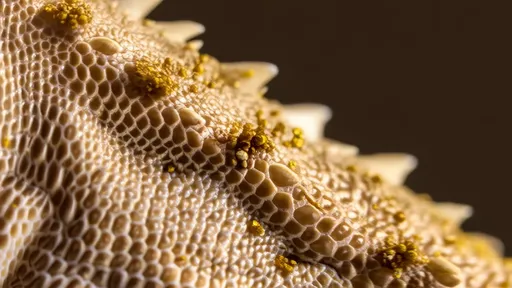
Lizard Skin Lungs": Optimized Cutaneous Gas Exchange System in Desert Species

By /Aug 18, 2025

In the harsh, arid landscapes where water is scarce and temperatures soar, desert-dwelling lizards have evolved remarkable adaptations to survive. Among their most fascinating features is a specialized form of cutaneous respiration—often colloquially referred to as "skin breathing." While this phenomenon isn’t entirely unique to lizards, certain desert species have refined it to an extraordinary degree, allowing them to thrive in environments where other creatures would perish. Researchers are now uncovering the intricate mechanisms behind this evolutionary marvel, revealing insights that could inspire innovations in biomimetic technology.
Biology

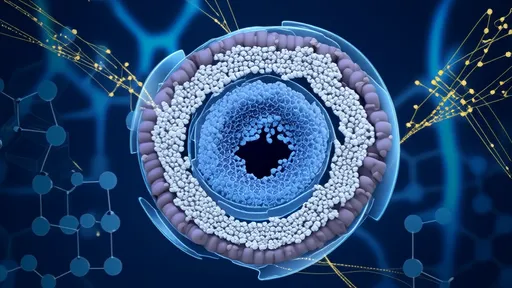
Light-Driven CRISPR Targeting Delivery System: DNA Guided Missiles"

By /Aug 18, 2025

In a groundbreaking development that merges nanotechnology with precision gene editing, scientists have unveiled a "photo-controlled missile" system capable of delivering CRISPR-Cas9 machinery to specific cells using light as the trigger. This innovative approach, published in Nature Biotechnology, represents a quantum leap in targeted therapeutic delivery, potentially overcoming one of CRISPR's greatest challenges: off-target effects.
Biology

Plant Gene Sentinels": Parasitic Plants Intercept Host Defense Signaling Pathways

By /Aug 18, 2025

In the intricate dance of survival between parasitic plants and their hosts, a remarkable discovery has unveiled a sophisticated molecular espionage system. Researchers have identified a previously unknown mechanism by which parasitic plants intercept and exploit defense signals from their hosts, effectively turning the host's own weapons against itself. This finding not only reshapes our understanding of plant-plant interactions but also opens new avenues for agricultural pest control.
Biology

Insect Photonic Armor": The Compressive Photonic Crystal Structure of the Exoskeleton of Buprestidae Beetles

By /Aug 18, 2025

In the dense rainforests of Southeast Asia, a shimmering jewel scurries across the bark of a rotting log. The jewel beetle, or Buprestidae, has captivated scientists not for its ecological role, but for an extraordinary feat of evolutionary engineering: its exoskeleton contains photonic crystals that manipulate light while remaining incredibly durable. This natural armor, thinner than a human hair yet resistant to crushing forces, is inspiring breakthroughs in materials science, from aerospace coatings to next-generation solar cells.
Biology

Deciphering the Spectral Characteristics of Coral Fluorescent Beacons" for Symbiotic Algae Bleaching Warnings

By /Aug 18, 2025

In a groundbreaking discovery that could revolutionize coral reef monitoring, marine biologists have identified spectral "early warning signals" emitted by stressed corals before visible bleaching occurs. The phenomenon, dubbed "fluorescent beaconing," involves intricate light-based communication between coral polyps and their symbiotic algae that becomes distorted under thermal stress.
Biology

Erasing Cellular Age": Instantaneous Reprogramming Reverses Epigenetic Clock

By /Aug 18, 2025

In a groundbreaking development that challenges our understanding of cellular aging, scientists have unveiled a revolutionary technique dubbed the "cellular age eraser." This approach leverages transient reprogramming to effectively turn back the epigenetic clock—the molecular signature of a cell's biological age. Unlike traditional reprogramming methods that risk creating cancerous cells or losing cellular identity, this pulsed strategy offers a tantalizing glimpse into reversing aging while maintaining tissue function.
Biology

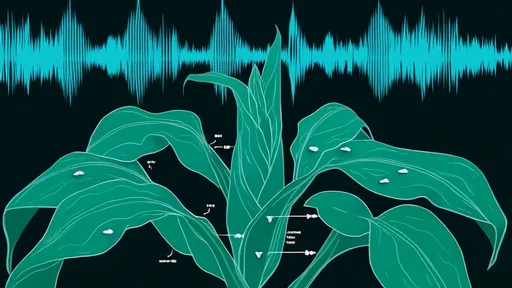
Plant 'Sound Guardian': Optimized Ultrasonic Pest Control Frequency Spectrum for Corn"

By /Aug 18, 2025

In the quiet hum of modern agriculture, a silent revolution is taking root. Researchers have uncovered an extraordinary defense mechanism hidden within one of humanity's oldest cultivated crops - corn plants emit ultrasonic frequencies when under insect attack. This discovery has sparked the development of revolutionary "Sonic Guardian" technology that could transform pest management practices worldwide.
Biology

Protein Brain Key": AI-Designed Blood-Brain Barrier Penetrating Carrier

By /Aug 18, 2025

In a groundbreaking development that could revolutionize drug delivery to the brain, researchers have leveraged artificial intelligence to design protein carriers capable of crossing the blood-brain barrier (BBB). This biological fortress, which protects the brain from harmful substances while allowing essential nutrients to pass through, has long been a formidable obstacle in treating neurological disorders. The newly engineered "brain keys," as scientists call them, represent a quantum leap in targeted therapeutics.
Biology

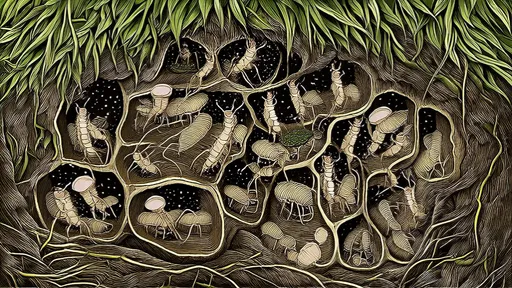
Ant Air Conditioning System": Precision Regulation Model of Leafcutter Ant Nest Temperature and Humidity

By /Aug 18, 2025

In the dense rainforests of Central and South America, an architectural marvel exists beneath the surface - the sophisticated underground nests of leafcutter ants. Recent research has revealed these tiny engineers have developed what scientists are calling the most precise natural air conditioning system ever observed in insect colonies.
Biology

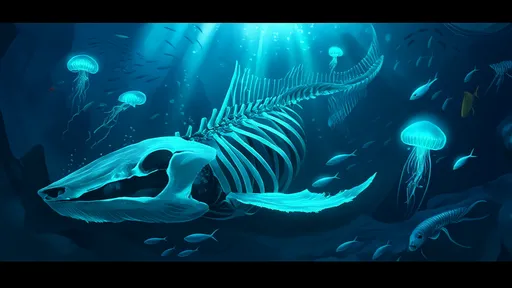
Whale Fall 'Virus Ark': Deep-Sea Carcasses Give Birth to New Giant Bacteriophages"

By /Aug 18, 2025

In the perpetual darkness of the ocean floor, where pressure crushes all but the most resilient life forms, scientists have uncovered a startling biological phenomenon: the carcasses of whales—known as "whale falls"—are serving as floating arks for mysterious viruses. These are not ordinary pathogens, but colossal bacteriophages, viruses that prey exclusively on bacteria, with genetic complexity rivaling some cellular organisms. The discovery, published last month in Nature Microbiology, challenges our understanding of viral evolution and their role in deep-sea ecosystems.
Biology

Deep-sea Geothermal Engine": Hydrothermal Vent Bacteria Utilize Infrared Radiation to Drive Carbon Cycle

By /Aug 18, 2025

In the perpetual darkness of the ocean’s abyss, where sunlight never penetrates, a remarkable biological phenomenon thrives. Deep-sea hydrothermal vents, often called "underwater geysers," spew superheated, mineral-rich fluids into the frigid water. These extreme environments host unique ecosystems powered not by photosynthesis, but by chemosynthesis—a process where microbes convert inorganic compounds into energy. Among these microorganisms, thermophilic bacteria, particularly those harnessing infrared radiation from hydrothermal vents, play a pivotal role in sustaining deep-sea carbon cycles. Scientists now refer to this intricate interplay as the "geothermal engine," a hidden force driving one of Earth’s most enigmatic biochemical processes.
Biology

Forest Carbon Pulse": Quantifying Diurnal Variations in Tree Photosynthetic Efficiency with Laser Scanning

By /Aug 18, 2025

In the heart of a dense forest, where sunlight filters through the canopy in dappled patterns, a quiet revolution in ecological research is unfolding. Scientists are now using advanced laser scanning technology to measure the daily fluctuations in tree photosynthesis with unprecedented precision. This phenomenon, dubbed "carbon pulsing," reveals how trees dynamically adjust their carbon uptake throughout the day—a discovery that could reshape our understanding of forest carbon cycles.
Biology

Endogenous Retrovirus Evolutionary Scars": Shaping the Mammalian Immune System

By /Aug 18, 2025

For decades, the remnants of ancient viruses embedded in mammalian genomes were dismissed as mere "junk DNA"—evolutionary debris with no functional purpose. However, recent research has unveiled a startling truth: these viral fossils, known as endogenous retroviruses (ERVs), have profoundly shaped the evolution of mammalian immune systems. Once considered genetic parasites, ERVs now emerge as unexpected architects of immunity, leaving behind what scientists call "evolutionary scars" that continue to influence health and disease.
Biology

Molecular Anchor": CPEB Protein Phase Transition Solidifies Long-Term Memory

By /Aug 18, 2025

For decades, neuroscientists have grappled with the enigma of how fleeting experiences transform into enduring memories. Recent breakthroughs in molecular biology have uncovered a surprising player in this process – a protein called CPEB that undergoes phase separation to form persistent gels, effectively acting as a "molecular anchor" for long-term memory storage.
Biology

Astrocyte Energy Steward": Regulating the Dynamic Allocation of Neuronal Mitochondria

By /Aug 18, 2025

In a groundbreaking study that redefines our understanding of brain energy management, researchers have uncovered the pivotal role of glial cells as the brain's "energy stewards." These long-overlooked cells, once considered mere support staff for neurons, are now recognized as master regulators of mitochondrial distribution within neural circuits. The findings, published across several high-impact journals, reveal an intricate cellular dialogue that could reshape approaches to neurodegenerative diseases and metabolic brain disorders.
Biology

Pain Neural Barcode: Atlas of Specific Spinal Circuits for Chronic Pain"

By /Aug 18, 2025

Chronic pain has long been one of medicine's most perplexing challenges, affecting millions worldwide while resisting conventional treatments. For decades, researchers have grappled with its elusive mechanisms – until now. A groundbreaking study published in Nature Neuroscience reveals the existence of a "neural barcode" system in the spinal cord that specifically encodes chronic pain signals, offering the first definitive roadmap to distinguish it from acute pain at the circuit level.
Biology

Rapid Vagus Nerve Transmission of Microbiota Metabolites: A 'Second-Level Channel' in the Gut-Brain Axis"

By /Aug 18, 2025

In a groundbreaking discovery that could reshape our understanding of gut-brain communication, researchers have identified a previously unknown "express pathway" through which microbial metabolites travel from intestines to brainstem neurons in mere seconds. This lightning-fast signaling system, mediated by specialized vagus nerve fibers, challenges decades-old assumptions about the sluggish pace of gut-derived chemical messaging.
Biology

Gamma Switch of Consciousness: Regulation of Arousal by 40Hz Thalamic Reticular Nucleus Oscillations

By /Aug 18, 2025

In a groundbreaking discovery that could reshape our understanding of consciousness, neuroscientists have identified the thalamic reticular nucleus (TRN) as a potential "gamma switch" regulating wakefulness through 40Hz neural oscillations. This finding, emerging from a confluence of animal studies and human brain imaging, suggests that the delicate dance of electrical activity in this overlooked brain region may hold the key to unlocking one of neuroscience's greatest mysteries: the biological basis of conscious awareness.
Biology

Microbe 'Plastic Miners': Wax Moth Gut Bacteria Degrade Polypropylene"

By /Aug 18, 2025

In a world drowning in plastic waste, scientists may have uncovered an unlikely ally in the fight against pollution: the humble waxworm. Recent research has revealed that the intestinal bacteria of these caterpillar-like creatures possess a remarkable ability to break down polypropylene, one of the most stubborn and widely used plastics. This discovery opens new avenues for tackling the global plastic crisis through biological means.
Biology

Neural 'Optical Bridge': Hydrogel Optical Fibers Repair Optic Nerve Injury"

By /Aug 18, 2025

In a groundbreaking development for regenerative medicine, researchers have pioneered the use of hydrogel-based optical bridges to repair damaged optic nerves, offering new hope for patients with vision impairment. This innovative approach leverages the unique properties of biocompatible hydrogels combined with advanced optical technology to create a "neural light bridge" that can guide and stimulate nerve regeneration. The implications of this breakthrough extend far beyond ophthalmology, potentially revolutionizing treatments for various types of neural damage.