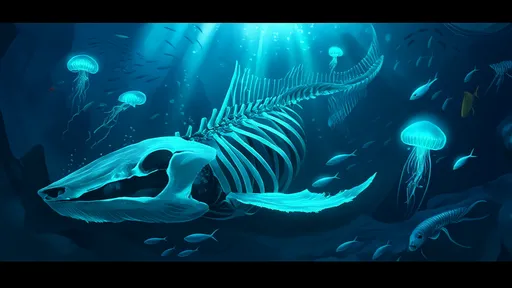
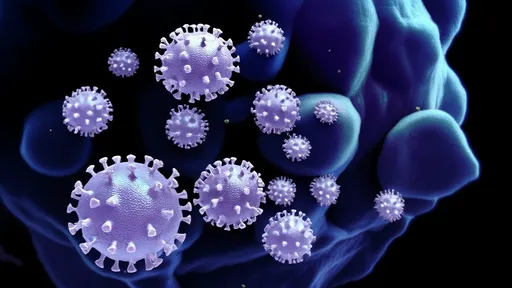
In the perpetual darkness of the ocean floor, where pressure crushes all but the most resilient life forms, scientists have uncovered a startling biological phenomenon: the carcasses of whales—known as "whale falls"—are serving as floating arks for mysterious viruses. These are not ordinary pathogens, but colossal bacteriophages, viruses that prey exclusively on bacteria, with genetic complexity rivaling some cellular organisms. The discovery, published last month in Nature Microbiology, challenges our understanding of viral evolution and their role in deep-sea ecosystems.
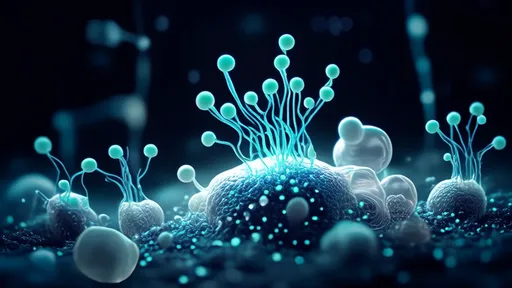
The research team, led by marine virologist Dr. Sylvia Velez from the Monterey Bay Aquarium Research Institute, stumbled upon these viral giants while studying microbial communities around a 30-ton gray whale skeleton off California’s coast. "We expected to find bacteria and bone-eating worms," Velez admits. "Instead, we found viral sequences so large and bizarre, we initially thought they were contaminants." Subsequent metagenomic analysis revealed these were Megaphages—viruses with genomes exceeding 540 kilobases, larger than many bacteria.
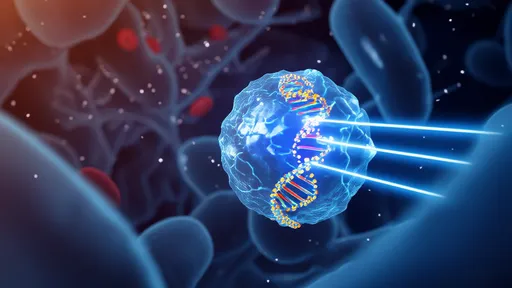
What makes these deep-sea phages extraordinary isn’t just their size. Their genomes contain CRISPR-like systems—a bacterial immune mechanism—suggesting an evolutionary arms race at crushing depths. "It’s as if the phages are pirating the very weapons bacteria use to destroy them," explains co-author Dr. Hiro Tanaka from Japan’s JAMSTEC agency. This finding implies that whale carcasses, which can sustain ecosystems for decades, act as evolutionary hotspots where viruses and bacteria engage in genetic warfare, trading adaptive innovations.
The study’s most provocative revelation concerns the phages’ potential role as "genetic librarians." Within sediment samples near the whale fall, researchers identified viral genes coding for antibiotic resistance and heavy-metal detoxification—traits highly valuable to bacteria in polluted marine environments. "These phages aren’t just killers," Velez emphasizes. "They’re reservoirs of survival genes that may get transferred to bacterial hosts during infection, essentially vaccinating them against environmental threats."
This discovery raises profound questions about ocean health. With commercial whaling historically removing whale falls from the ecosystem, scientists speculate that we may have inadvertently disrupted a viral gene-exchange network crucial for microbial adaptation. "Each whale that died naturally used to seed the abyss with these viral arks," says deep-sea ecologist Dr. Liam O’Connor, unaffiliated with the study. "Now, synthetic pollutants might be altering this ancient system in ways we don’t comprehend."
Further investigations are already underway. The team plans to culture these megaphages with their bacterial hosts using high-pressure bioreactors that simulate deep-sea conditions. Success could unlock novel biotech tools, from precision phage therapies to pollution-cleaning engineered microbes. Yet the abyss keeps its secrets close; as Velez notes, "For every viral sequence we decode, a hundred more remain as enigmatic as the whale fall ecosystems themselves."
As climate change and deep-sea mining increasingly impact these fragile ecosystems, the study underscores an urgent need to explore these viral dark matters. Whale falls, it seems, are not just graves—they’re cradles, where life, death, and evolution perform an eternal dance at the very edge of existence.
By /Aug 18, 2025
By /Aug 18, 2025
By /Aug 18, 2025
By /Aug 18, 2025
By /Aug 18, 2025

By /Aug 18, 2025
By /Aug 18, 2025
By /Aug 18, 2025
By /Aug 18, 2025
By /Aug 18, 2025
By /Aug 18, 2025
By /Aug 18, 2025
By /Aug 18, 2025
By /Aug 18, 2025
By /Aug 18, 2025

By /Aug 18, 2025
By /Aug 18, 2025
By /Aug 18, 2025
By /Aug 18, 2025
By /Aug 18, 2025